Feed conditioning
Characterize, store and prepare spent acid for controlled delivery to the decomposition system.

ACID PLANTS · RESOURCE RECOVERY
Recover sulfur value from contaminated spent acid through controlled decomposition, gas cleaning, catalytic conversion and absorption.
PROCESS CONTEXT
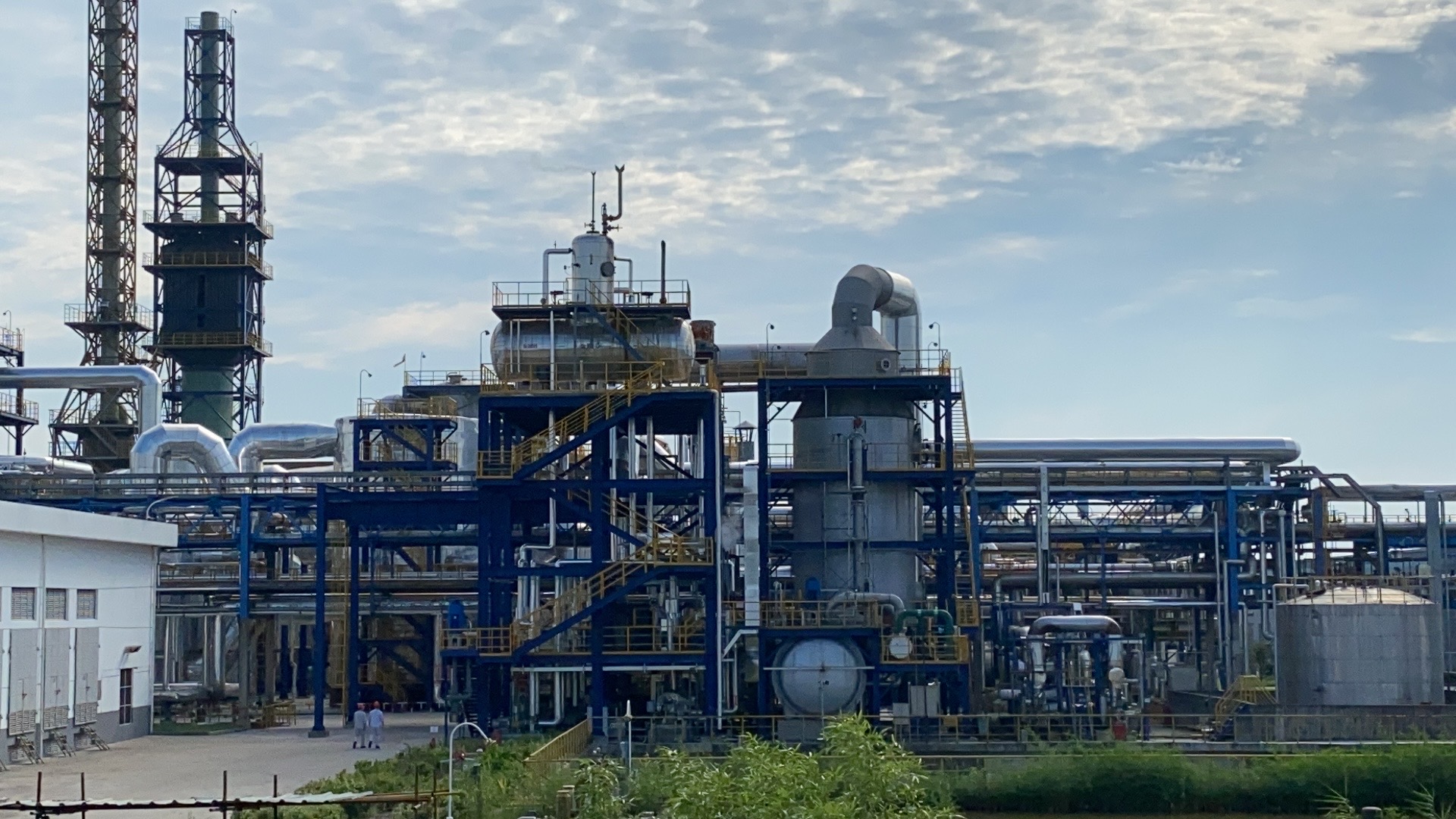
Sulfuric acid used in refining and chemical processing can become diluted or contaminated even when its catalytic role does not consume the sulfur value itself. Regeneration thermally decomposes the spent acid into an SO2-bearing gas, conditions that gas, and returns it to sulfuric acid through the contact process.
The feed assay drives the plant. Water, hydrocarbons, dissolved solids, nitrogen compounds and variability influence furnace duty, oxygen demand, gas cleaning, NOx risk, corrosion, by-product handling and the final heat balance. A credible design therefore begins with feed characterization and operating scenarios—not a standard equipment list.
HOW IT WORKS
The regeneration section produces and cleans an SO2-bearing gas; the contact section converts and absorbs it into product acid.
Characterize, store and prepare spent acid for controlled delivery to the decomposition system.
Atomize and thermally decompose the feed, using the selected support-fuel and oxygen strategy.
Recover heat where practical, then remove acid mist, ash and feed-derived contaminants.
Dry and condition the gas as required before catalytic conversion with controlled temperatures.
Absorb SO3 in circulating acid and manage concentration, cooling and final gas treatment.
DESIGN PRIORITIES
These priorities must be evaluated together during concept selection and basic engineering.
Define normal, minimum, maximum and upset compositions so the furnace and cleaning train are sized for reality.
Coordinate lancing, residence time, temperature control, support fuel and oxygen strategy for stable decomposition.
Address formation mechanisms and removal requirements from the earliest process configuration stage.
Evaluate sulfur co-firing, oxygen enrichment and recuperation against feed variability, utilities, CAPEX and operating objectives.
TYPICAL SYSTEM SCOPE
The public TMCE scope combines furnace and lancing knowledge with gas cleaning, contact-process equipment and long-term operating support.
TMCE DELIVERY
Assay review, variability envelope, material balance and route screening.
Furnace, cleaning train, contact section, heat integration and utilities.
Lancing, vessels, heat exchangers, catalyst and control interfaces.
Initial startup, troubleshooting, overhaul and long-term operating support.
RELATED